DOK.network Africa
Africa Day 2014
A cooperation with the iREP Film Festival in Nigeria
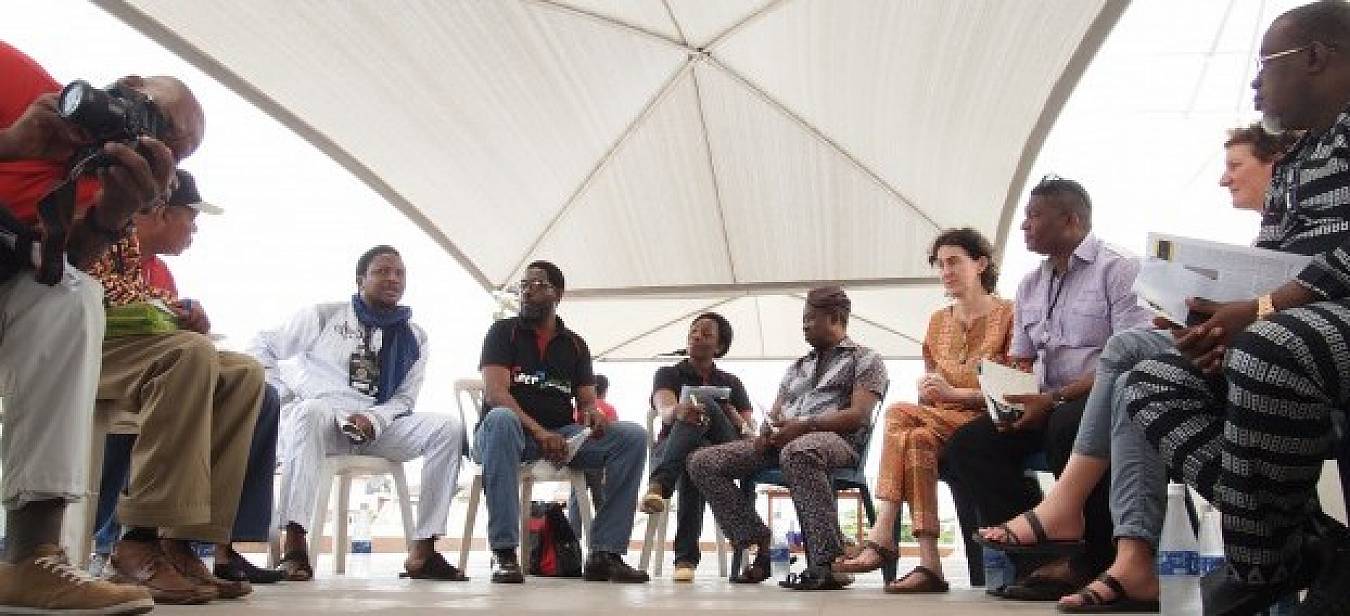
Concrete points of action 2014: Curating films for iREP and the DOK.fest Munich
In order to show our audiences an authentic picture of the festival profiles, we invited each other to curate one film for the respective festival edition of iREP and DOK.fest Munich in 2014. The films selected should be stories from cross-cultural intersections, as well as they should show us our common humanity and the common values we have. Stories which make us human.
IREP 2014
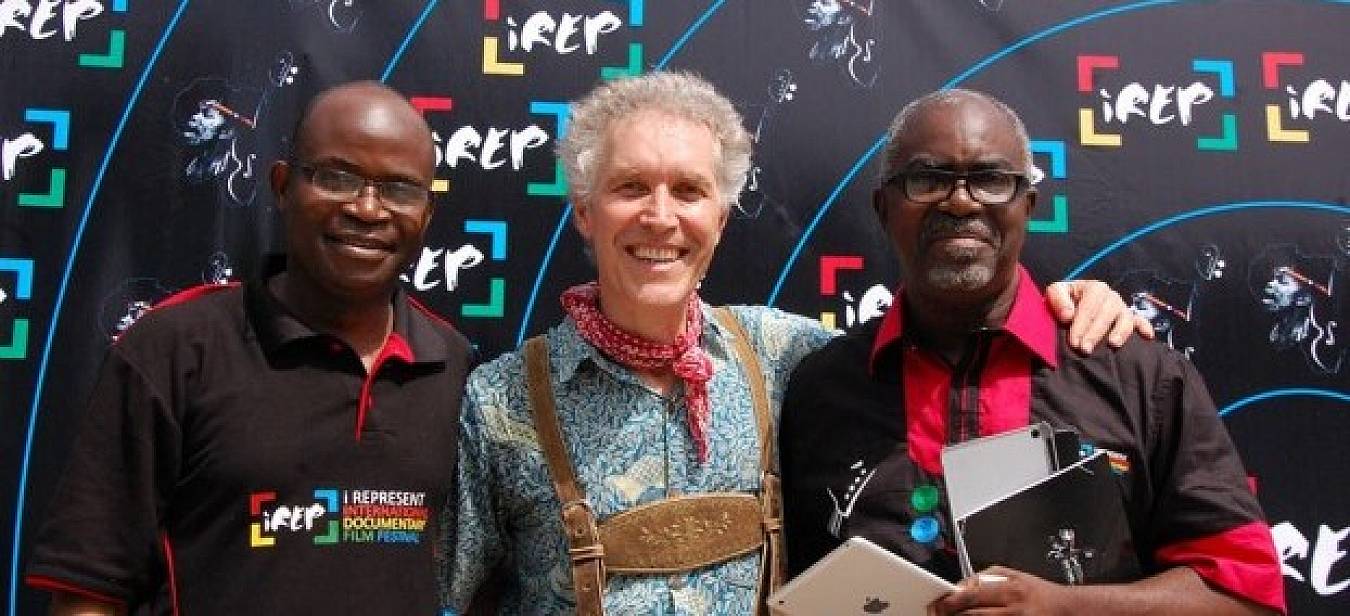
For iREP 2014 from 20th until 23rd of March we took the documentary STILL of the filmmaker Matti Bauer from Munich to Lagos: http://www.dokfest-muenchen.de/filme.php?films_festival=11&lang=en
Together with Matti Bauer dressed in original Bavarian Lederhosen – a traditional costume – DOK.fest presented this film on Saturday evening to the audience in Lagos.
DOK.fest 2014
In return the film “Rwanda: Beyond the Deadly Pit“ by the Rwandan filmmaker Gilbert Ndahayo proposed by iREP Lagos was shown at the 29th edition of DOK.fest Munich in the section DOK.special: http://www.dokfest-muenchen.de/filme_view_web.php?fid=6874&lang=en
The first documentary by a Rwandan about the Rwandan Genocide in 1994, which in 2012 was nominated for the Africa Africa Movie Academy Award – the African Oscars.
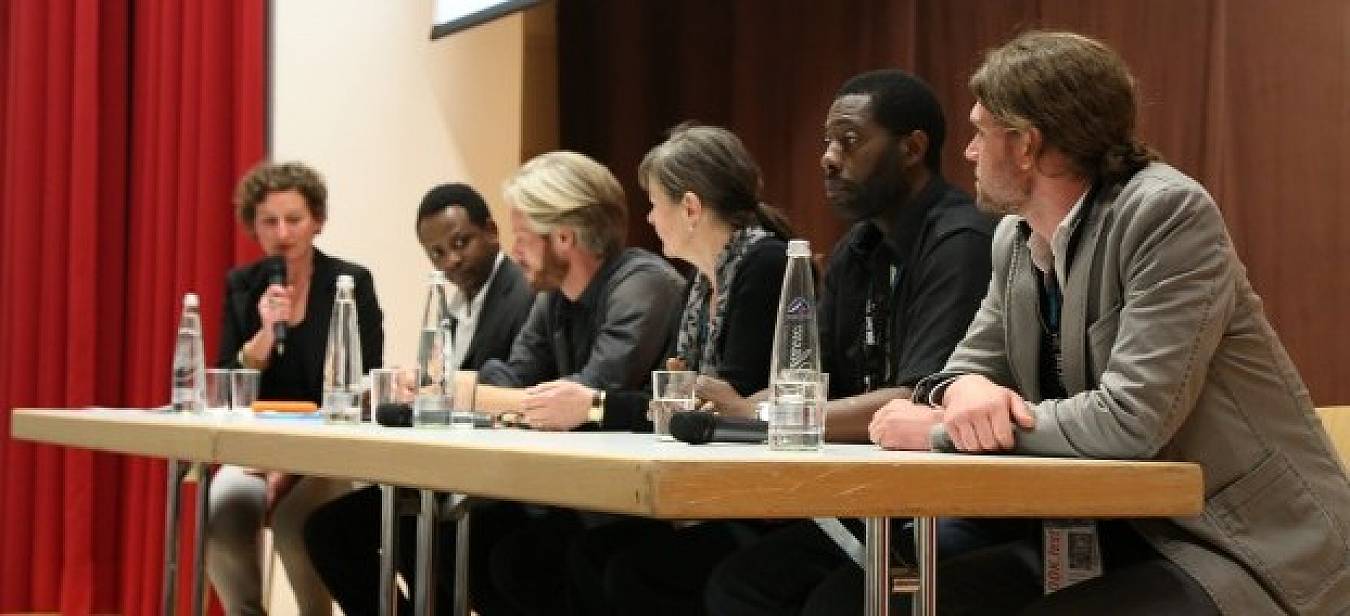
During DOK.fest Sunday 11th of May at the venue Staatliches Museum für Völkerkunde was devoted to the African continent. Themed “A question of perspective!?” four films from and about Africa were shown. Besides “Rwanda: Beyond the Deadly Pit“ there were...
„Concerning Violence“ von Göran Hugo Olsson: http://www.dokfest-muenchen.de/filme_view_web.php?fid=6916&lang=en
„We Were Rebels“ von Katharina von Schöder und Florian Schewe: http://www.dokfest-muenchen.de/filme_view_web.php?fid=6923&lang=en
„Zurück in den Süden“ von Steffen Weber: http://www.dokfest-muenchen.de/filme_view_web.php?fid=6550&lang=en
The day was completed with a panel discussion. On the panel sat the two German filmmakers Florian Schewe and Steffen Weber as well as Gilbert Ndahayo from Rwanda. Also Bettina Kocher representing the Fernsehworkshop Entwicklungspolitik and Femi Odugbemi, co-founder and executive director of the iREP documentary film festival in Lagos, Nigeria.
Synopsis Panel Discussion
Our view on Africa is still shaped by the colonial past. Commercially attractive, meaning quick and negative news and stereotypical pictures and narratives have been surrounding us for decades. Yet the World is moving on and Africa is developing on a fast pace. Technological progress makes the world smaller, far away distances become closer. For example the sad and appalling abduction of 200 hundred girls in Nigeria’s North reached global publicity and solidarity through Facebook and Twitter during the last weeks. In documentary filmmaking technology makes it possible today for young African filmmakers to pick up a camera to go out and shoot. You do not have to apply for funds at European institutions and TV stations to shoot a documentary film. An uninfluenced view is possible now.
Besides that, there is a growing demand among African filmmakers to finally determine the view about Africa by themselves: during a documentary filmmaking conference in South Africa 2011 the Documentary Network Africa was founded to promote African storytelling.
Now, what impact do these developments have for documentary filmmaking about Africa? What consequences and responsibilities do emerge from that if any? Is it necessary to be pedagogic? Is it a question of content? Can documentaries from young African filmmakers play a role in finally decolonizing the view on Africa ? What will be the ways in which we are capturing our intersecting realities and experiences between Africa and the West? What future for making films about Africa?
Panelists
Bettina Kocher
is a social anthropologist and cultural manager, cofounder of the office for culture and media projects in1992 in Hamburg.
Since 1995 she is managing director of the Television Workshop Development Politics – a consortium of organizations involved in development cooperation, intercultural education and in the field of film and television – regularly presenting current film and television productions, which reflect North-South issues, and organizing events and seminars in which the current debates about the media coverage of North-South issues are discussed.
Since 2012 she's working with EZEF, the Protestant Center for Film in Development Education, distributing films on North-South Issues in an educational context.
Gilbert Ndahayo
studied history at the University in Kigali. But soon after in 2005 his passion for storytelling drove him to film. In 2008 he migrated to New York City where he started to study film at Columbia University. At the moment he's working on his graduation film. Gilbert Ndahayo is the first Rwandan genocide survivor to make a personal film on the subject. His documentary Behind This Convent (2008) received Verona Award for Best African Film. With Rwanda: Beyond the Deadly Pit, he was also the first Rwandan nominated for the African Movie Academy Awards – the African Oscars - in 2012.
Femi Odugbemi from Lagos, Nigeria
was trained in Film & TV Production at Montana State University, in the United States. He is an award-winning filmmaker, writer and photographer. And runs his own TV and film production company Dvworx producing TV commercials and documentaries. He has been President of the Independent Television Producers Association of Nigeria and is a member of the Documentary Network Africa. He is one of the founding directors of the yearly iREPRESENT International Documentary Film Festival in Lagos which aims to strengthen a documentary cinematic culture in Nigeria. He recently chaired the jury of the Africa Magic Viewers Choice Award in Lagos.
Steffen Weber
After getting a degree in philosophy he studied film at HFF here in Munich. Since 2001 he works as author and filmmaker. Today he is freelancer for the film production company Altmeier and Hornung in Hamburg which produces mainly investigative, journalistic documentaries mainly for public TV stations like SWR, NDR or ARTE. He did film projects around the world, but has a special interest in Africa. He lived more than a year in Tanzania and speaks fluently Kiswahili. He also was filming in Nigeria for a documentary about gas-flaring. He's the filmmaker of Zurück in den Süden which will be shown after this discussion.
Florian Schewe
He started studying sociology but soon realised his passion for film. From 2005 – 2011 he studied film at HFF Konrad Wolff in Potsdam-Babelsberg. He now works as freelance filmmaker, author and producer. Together with Katharina von Schröder he made the film 'We Were Rebels' and the related Online-Filmproject 'The Two Sudans'. Just in April he won at the New Berlin Film Award the price for best documentary for his latest work: “Wiener Ecke Manteuffel” He also was involved in the 24hrs documentation about Jerusalem which was aired recently on ARTE.
Contact DOK.network Africa: Barbara Off, off@dokfest-muenchen
