
(Dis)connected – in the Labyrinth of Algorithms
Interview about FINDING CONNECTION with the director Florian Karner by Pablo Bücheler
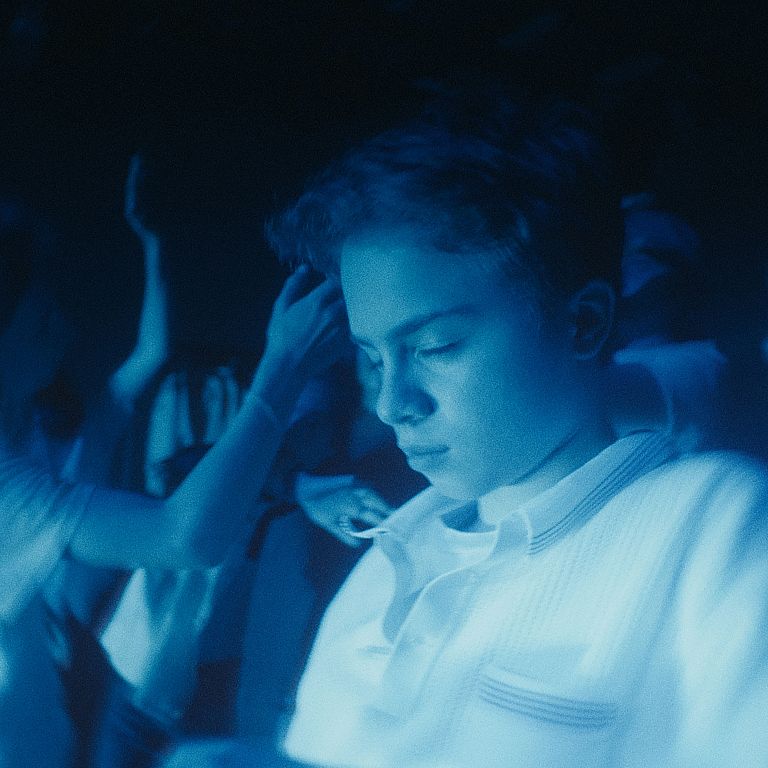
In his graduation film at the Baden-Württemberg Film Academy, Florian Karner follows four people looking for emotional connection in conversations with AI chatbots because their real relationships have become fractured. His film FINDING CONNECTION combines restrained observation with abstract AI generated images in a resonant space about intimacy, loneliness and the human need to be heard and understood. We spoke to the director.
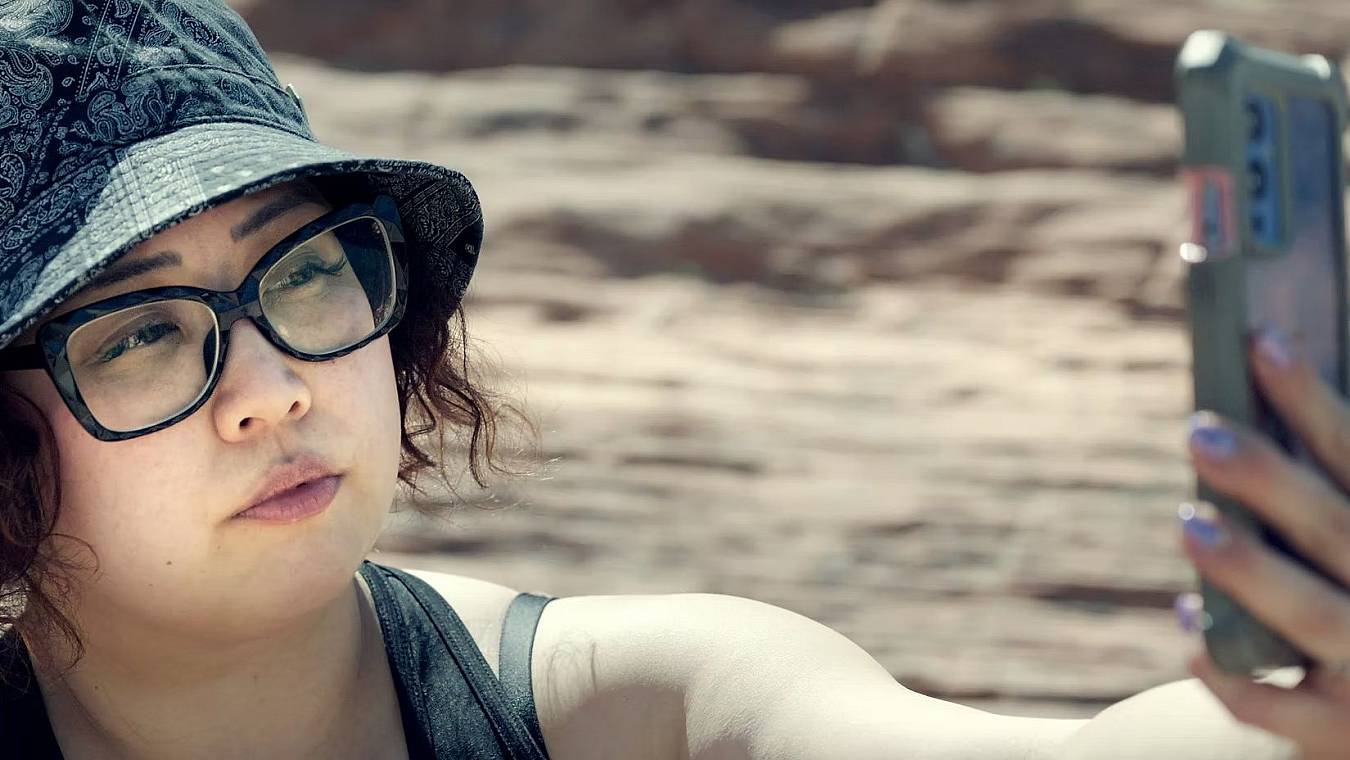
In your film you follow four people who have developed real emotional connections to AI chatbots. How did you come across this topic?
The starting point was actually something different. I was researching the topic of loneliness and asked myself what opportunities are there to escape it. The first working title was actually "Rebellions against Fear". During the research, I came across AI companion apps, which are apps that simulate an AI character that you can talk to, write to and build a kind of relationship with. Although I knew that an app was ingratiating itself with me, it nevertheless had an effect. It felt surprisingly good – maybe because I am familiar with loneliness myself. I realised that by looking at the way that AI is being used, you can say something about loneliness in our society.
How did you come across the protagonists?
Shortly after ChatGPT was released, I began looking for people whose connection to AI was already deeply rooted. In doing so, I came across a community that has used AI companion apps since 2017. Just as I was carrying out my research - in February 2023 - the platform suddenly introduced filters that prevented intimacy. The community was in uproar. It was clear to me how deep their connections really were. After that, I had conversations for almost a year with around twenty users – online and in person – and slowly gained their trust. They were very wary of filmmakers because there had been lots of simplistic media reports on the topic.
That sounds like a long process. Why was building trust so important?
Because this community had often been portrayed in a very one-dimensional way. First, I had to understand what I was dealing with: when are my protagonists talking about role play and when are they talking about something they are really experiencing? That took a while. I had met the protagonists from Hamburg, Lübeck and England in person beforehand. With one user from the USA, we regularly spent time together over the course of a year via video call simply to get to know each other away from the camera.
Something that stands out in the film is its distinctive aesthetic stance and a keen awareness of how much distance is needed. How would you describe your approach to making the film?
Adopting an empathetic, humanistic stance is absolutely central for me. Empathy in this sense doesn’t mean that you accept everything unreservedly. You can also offer criticism empathetically. But I work with great affection for my protagonists and their stories. That was important to me because in recounting this material, you quickly come up against prejudices and the reflex to think: this just affects other people. I didn’t want to cater to that. For the imagery, we translated this into two levels: one that
was very close, unfocussed, almost between the ear lobe and the earphones in this intimate safe space. And, at the same time, one that was very far away, in long wide shots that leave space for reflection.
There’s still no real language for talking about these kinds of relationships. Do you see that as a sign that we don’t yet understand the phenomenon or rather that we haven’t yet accepted it?
Both, I think. For me, the topic has become more complex overall. There are studies that show that these conversations are really helpful in many situations. You train yourself to reconnect with the language, develop confidence in yourself when communicating and let go of some of the fear of the next step. This is a very positive effect. At the same time, we lack the social framework to speak about this matter without immediately thinking in boxes. This is exactly what I wanted to challenge with this film.
You came to this topic with your own experiences of loneliness. How did working with the protagonists affect you?
First of all, it was incredibly moving to be met with this level of trust. In all of the lives that we entered, the protagonists opened up a very personal part of themselves to us. That was something quite special for everyone in the team. What I took away from working on the film is an understanding of how much depends on your own self. You have to learn to love yourself and to take responsibility for your own needs, rather than expecting the world around you to do it for you. And AI can also be useful here, as a companion on the path towards recognising and communicating your own needs.
How has your view of people who develop close connections to chatbots changed?
At first, I didn’t find it easy to take these relationships seriously. It was all very unusual and new, until I realised that the users mostly use these relationships with AI as a refuge that they have chosen for themselves and are conscious that they are talking to an app. In my view, the real danger lies elsewhere - in the responsibility that the companies hold. A language model only predicts the probability of the next word, but I read meaning into it and think it has understood me. This is where the attraction lies - and
also the risk. If companies need to become profitable, these intimate connections can become a price trap or be exploited in advertising strategies or for political influence. For me, that is the real danger: not the users but the developers.
Are there areas in your life that you would like to keep free from AI?
Yes, the human interaction. When we came together in person again after the lockdowns during the pandemic, we could really feel it: it is just something different. AI can help us to better understand ourselves and to recognise certain needs. But there is a limit because what happens with a human being is simply not comparable.
Many thanks to the filmmaker Florian Karner!
Watch FINDING CONNECTION at DOK.fest Munich 2026. You can find all
the screening dates here and the entire 2026 film programme here.
